Hardware is sized for the door, not the building
Springing, drums, cable size, and track gauge have to match the door weight and lift type. A mismatched setup can lead to hard operation and repeat failures.
Describe your building, door type, and what's not working once, and we'll connect you with a local Santa Ana contractor who installs and repairs commercial overhead doors.
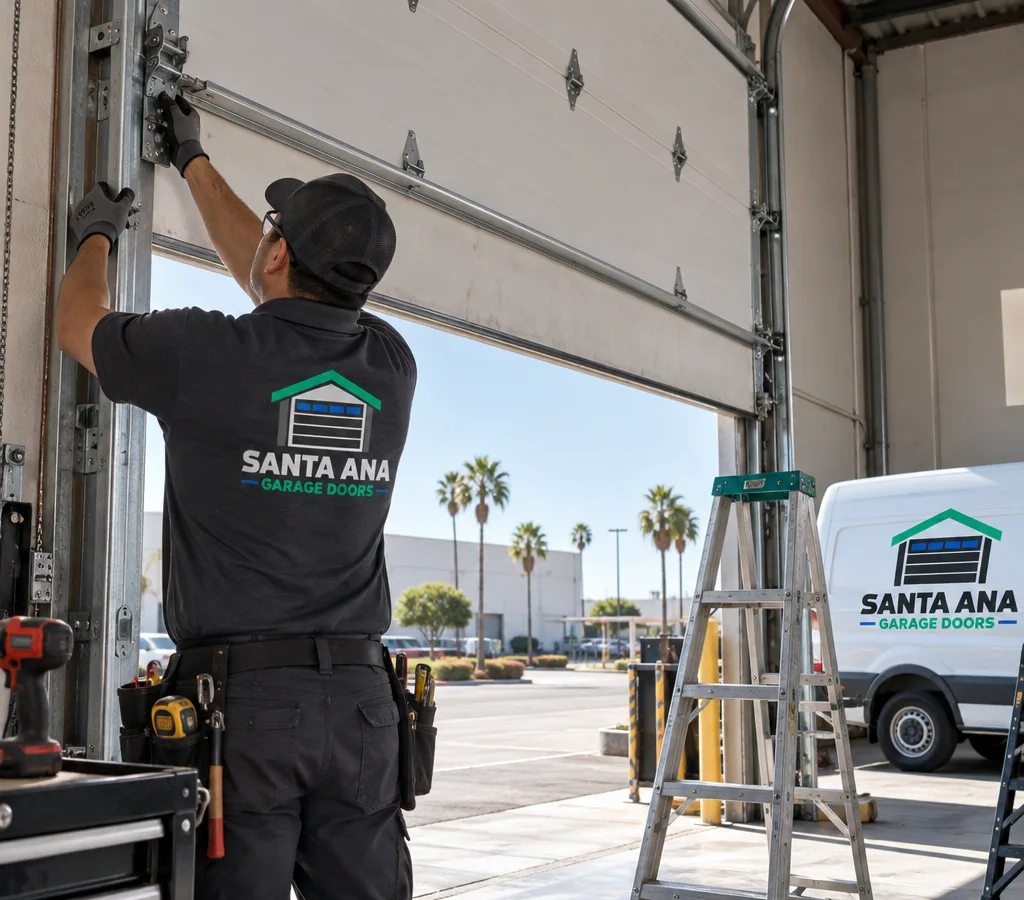
Commercial garage door installation is more than swapping panels. The installer has to match the door to the opening, traffic, and operator use so it runs smoothly day after day.
When you call Santa Ana Garage Doors, you describe the job once and we connect you with a local contractor who handles commercial doors. The contractor will usually start by confirming a few details that drive the whole install:
A proper install typically includes setting the tracks and brackets, hanging sections or curtain, installing torsion springs or rolling door counterbalance, setting cables and drums, adding seals, and then balancing and adjusting the door so it moves correctly before the operator is set.
If what you really need is troubleshooting on an existing door instead of replacement, the contractor may treat it as commercial garage door service first: inspect, identify the failing component, and then recommend repair versus replacement based on safety and downtime risk.
Problems at a home, such as a stuck residential door, are handled differently because the door size, cycle rating, and hardware are typically lighter-duty than what you find in warehouse bays.
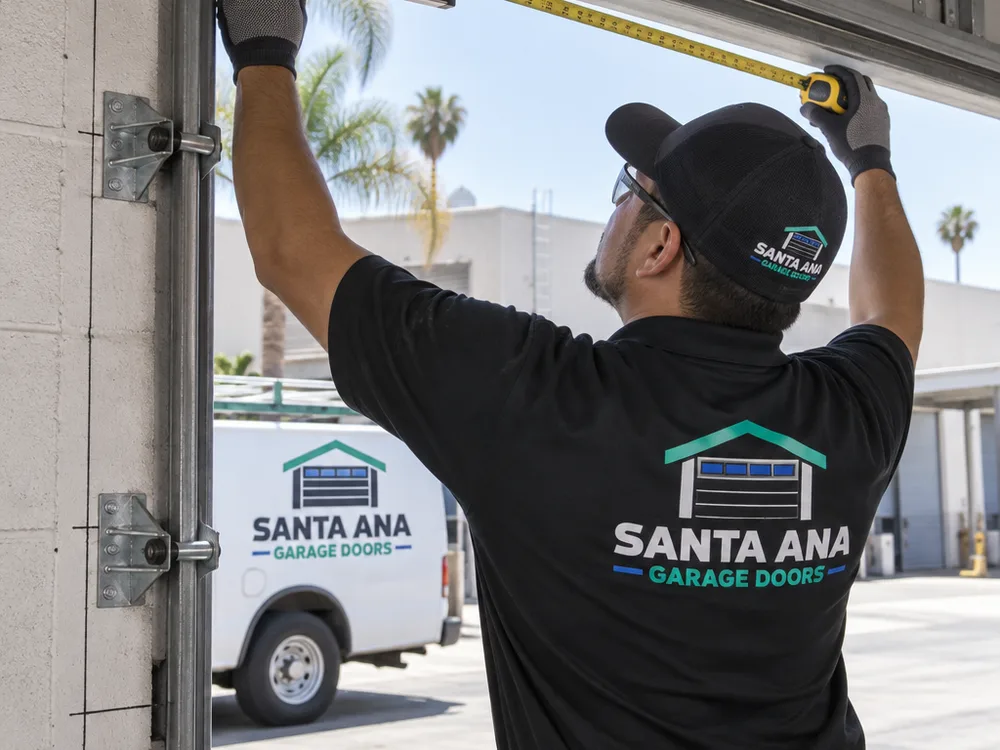
Springing, drums, cable size, and track gauge have to match the door weight and lift type. A mismatched setup can lead to hard operation and repeat failures.
Limit settings, safety devices, and operator mounting matter. A door that is not balanced correctly will wear out operator components.
Cables, rollers, hinges, bearings, and bottom fixtures take the abuse. A good inspection looks for the part that caused the breakdown, not just the symptom.
Rolling doors commonly bind from guide wear, misalignment, or curtain damage. Sectional doors more often drift out of track or lose tension as components wear.
Commercial doors have heavier moving sections and higher spring forces. The contractor will typically lock out the operator and control the opening before working.
Tell us the door type, approximate size, whether there's an operator, and what's happening now—such as a door that will not open, is stuck halfway, is off track, makes a grinding sound, or has impact damage.
You'll speak directly with the contractor who can take on commercial garage door installation or repair work in the Santa Ana area.
Photos of the opening, tracks, operator, and any labels help identify the hardware and what might be needed. Also mention access hours and whether the bay needs to stay clear.
The contractor confirms measurements, checks balance and alignment, and walks through repair versus replacement options. You decide whether to move forward.
If your bay door is down, describe the job once and get connected with a local contractor who works on commercial overhead and roll up systems.
Sectional and rolling systems rely on different tracks, guides, counterbalance components, operators, and wear points.
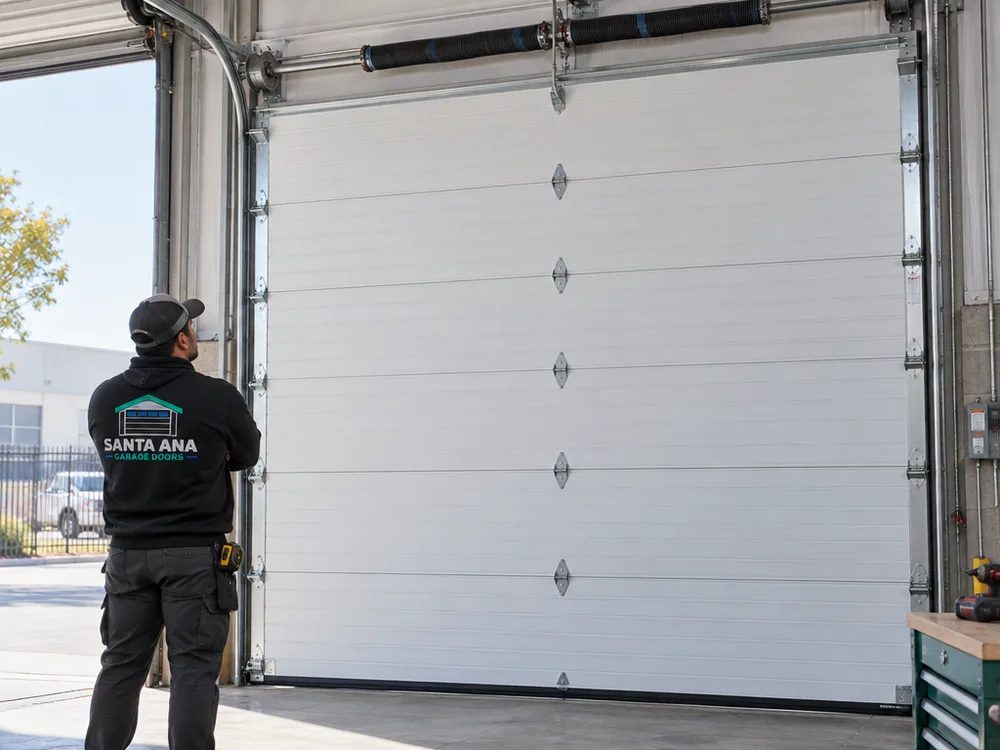
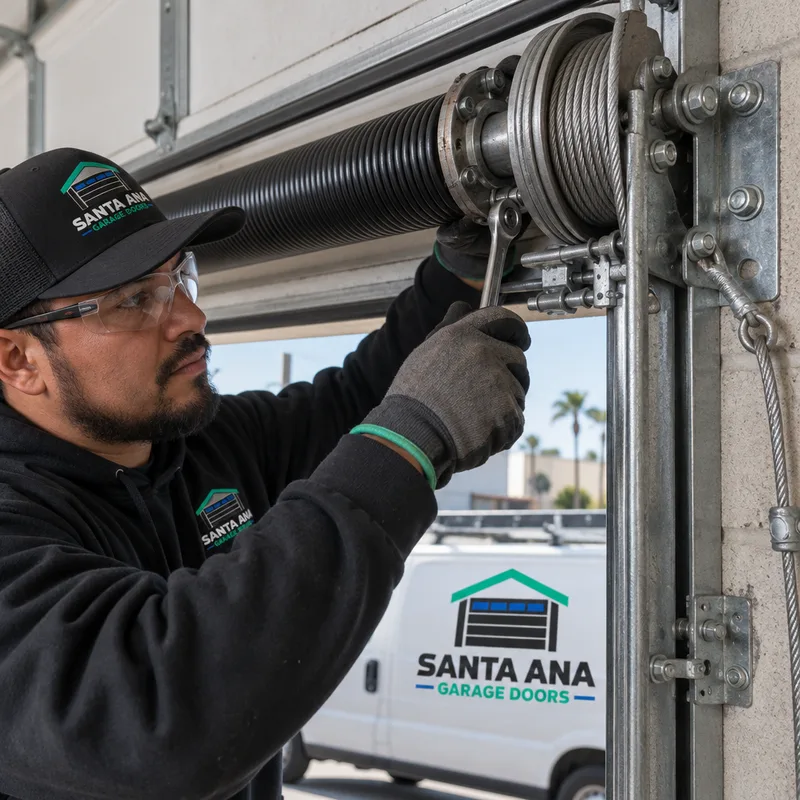
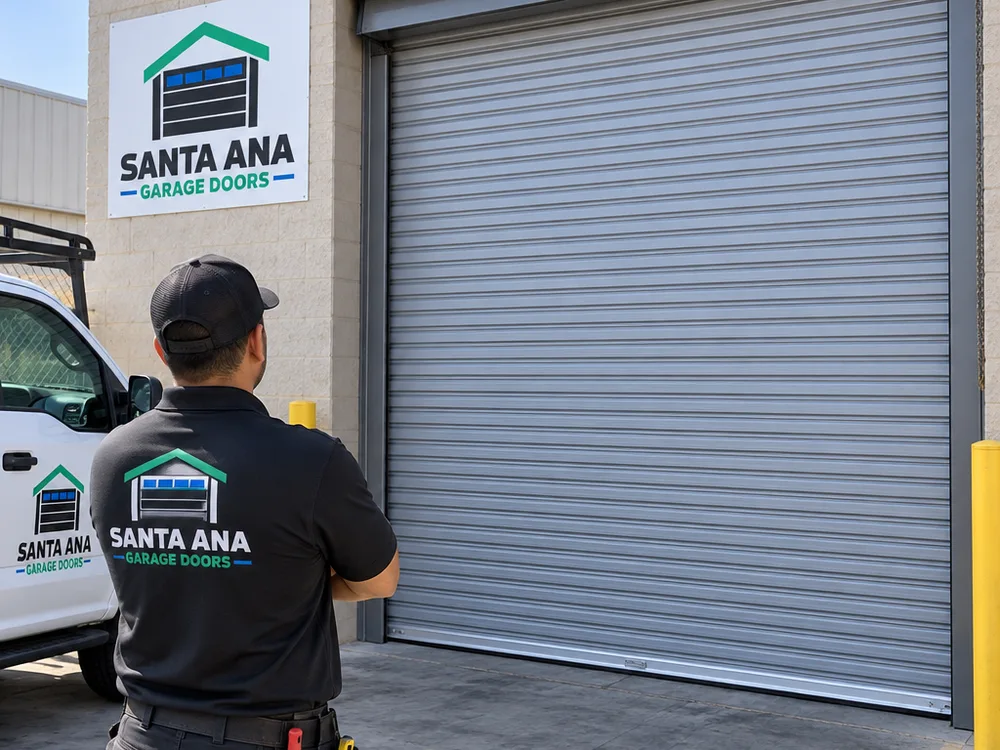
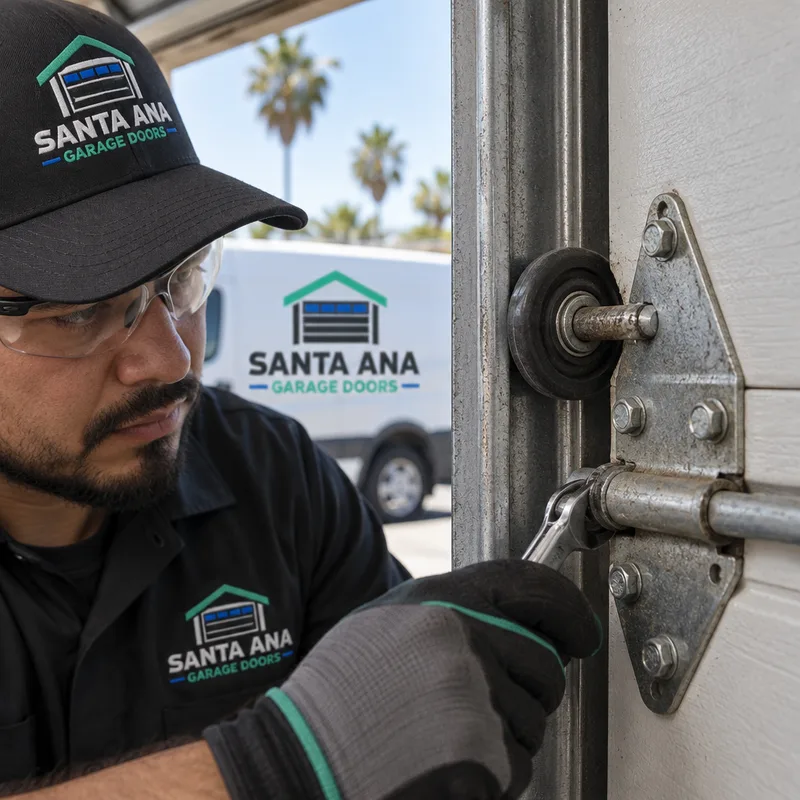
If the door is structurally sound and the opening is still a good fit, many issues can be handled as commercial garage door service. The contractor will look for curtain or panel damage, track alignment, spring integrity, cable condition, and operator wear; if the door has major impact damage, repeated binding, or obsolete parts, replacement may be the cleaner path.
Door type, approximate width and height, whether the door is motorized, and what the door is doing when you try to run it are the big ones. Photos of the tracks, spring line or barrel, operator, and visible damage help identify the hardware before the contractor arrives.
Roll up door repair often comes down to guide issues, curtain damage, or the barrel and counterbalance not turning smoothly. A contractor will check for bent guides, misaligned brackets, a bottom bar that is catching, worn end locks, and tension or bearing problems at the barrel.
Warehouse overhead door repair usually starts with safety and balance. The contractor will secure the opening, disconnect the operator if needed, and check spring tension, cable routing, drums, rollers, hinges, and track spacing. They will also look at the floor line and threshold because a high spot can make a heavy door feel like it is failing.
Sometimes, but only if the operator is correctly sized and compatible with the new door's weight, lift type, and mounting layout. During installation, the contractor will verify the door is balanced first, then evaluate whether the operator's drive, limits, and safety devices make sense on the replacement.
Industrial garage door repair typically includes locking out the operator, stabilizing the door, and then repairing failed parts such as cables, rollers, hinges, bearings, or spring components before adjustments are made. The contractor should test manual operation first, then powered operation, and confirm the door tracks straight and seats correctly at the floor.
Yes, clearing the bay and keeping vehicles or pallets away from the track line gives the contractor room to set ladders, manage the door safely, and stage hardware. If the door is stuck open or partly open, plan for controlled access so no one walks under the door while it is being stabilized.
Explain the door type, the opening size, and what's happening once, and we'll connect you with a local Santa Ana contractor who can install or repair commercial overhead and roll up doors. You talk through options with the contractor and decide what to do next.