Describe the problem once
Share what the door is doing (crooked, stuck, off track, loud grinding) and what you can see near the drums, rollers, and bottom brackets.
Describe what happened once and we'll connect you with a local Santa Ana contractor who handles cable, track, and roller problems.
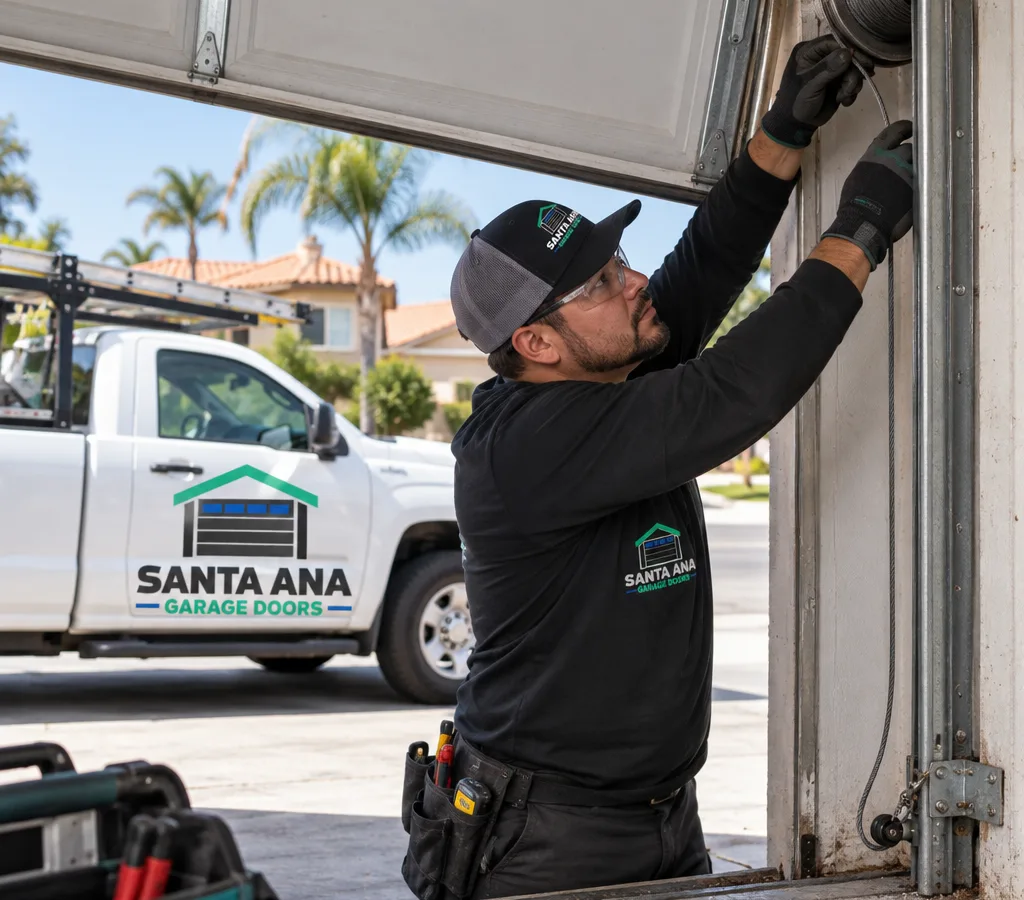
A broken garage door cable usually shows up suddenly: the door looks crooked, one side hangs lower, the door won't open, or it starts to bind and then stops. The cable's job is to lift evenly on both sides as the torsion spring system does the heavy work. When one cable snaps or jumps off the drum, the door can rack (twist), rollers can climb out of the track, and the opener can strain.
Because cable, rollers, and track all work together, contractors typically treat this as a system check, not a single-part swap. A call for garage door cable repair in Santa Ana often ends up involving:
If the door is stuck partway open or sitting uneven, avoid forcing it with the opener. That's when cables can whip, bottom brackets can shift, and the door can come down unexpectedly.
If you're still deciding who to call, Santa Ana Garage Doors keeps it simple: you describe the symptoms and what you can see, and we connect you with a local contractor who takes it from there. For other problems that are not cable-related, garage door repair can cover broader issues like opener behavior and general door troubles.
Share what the door is doing (crooked, stuck, off track, loud grinding) and what you can see near the drums, rollers, and bottom brackets.
Cable failures often involve re-leveling the door and checking track and roller condition, not just swapping a part.
You're connected with a contractor who works in Santa Ana and nearby communities, not someone routed in from far away.
You talk directly with the contractor, hear their plan for the fix, and decide whether to move forward.
A good contractor explains why the cable failed and what else needs attention (track alignment, roller wear, spring balance).
The contractor secures the door so it can't drop, then checks whether the opener is pulling against a jammed door and whether a roller is out of the track.
They look for a snapped cable, a cable that jumped the drum, frayed strands near the bottom bracket, or damage from the door twisting (including bent track or cracked rollers).
The correct cable length and end fittings are selected for the door setup. Cables are routed to the drums and seated in the drum grooves so both sides lift evenly.
If the door went sideways, garage door track repair may include straightening a bent section, re-aligning track spacing, and replacing damaged rollers or worn roller stems.
The door is checked for smooth travel by hand first, then run with the opener. The contractor confirms the door stays level and that rollers ride cleanly in the track without binding.
If the door is hanging uneven or a cable is visibly frayed, describe what you're seeing and get connected with a local contractor who handles broken cables, off-track doors, and track and roller corrections.
Cable condition, drum seating, roller position, and track alignment all affect whether the door lifts evenly and travels without binding.
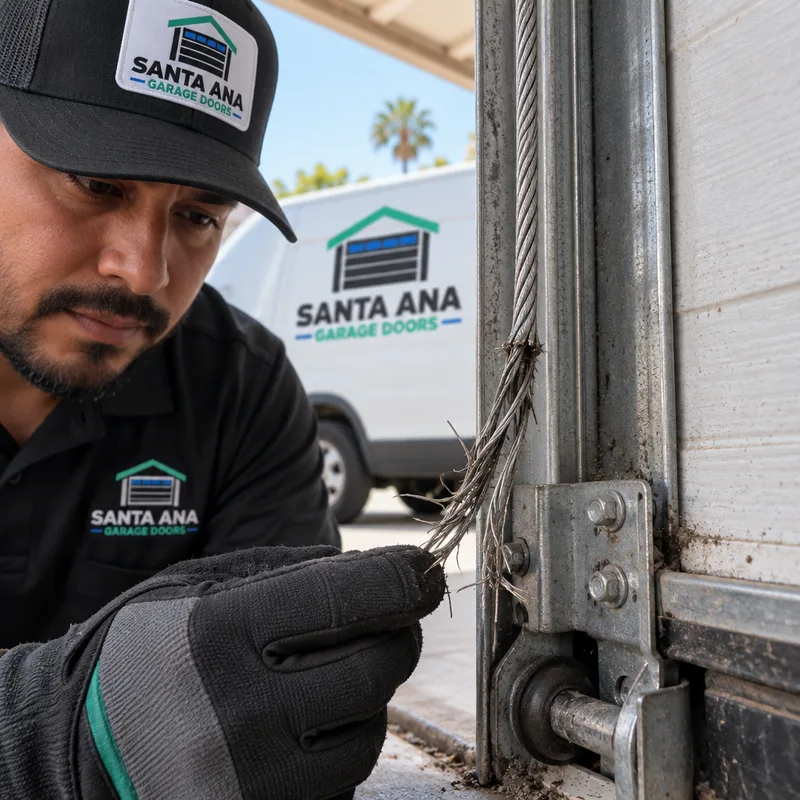
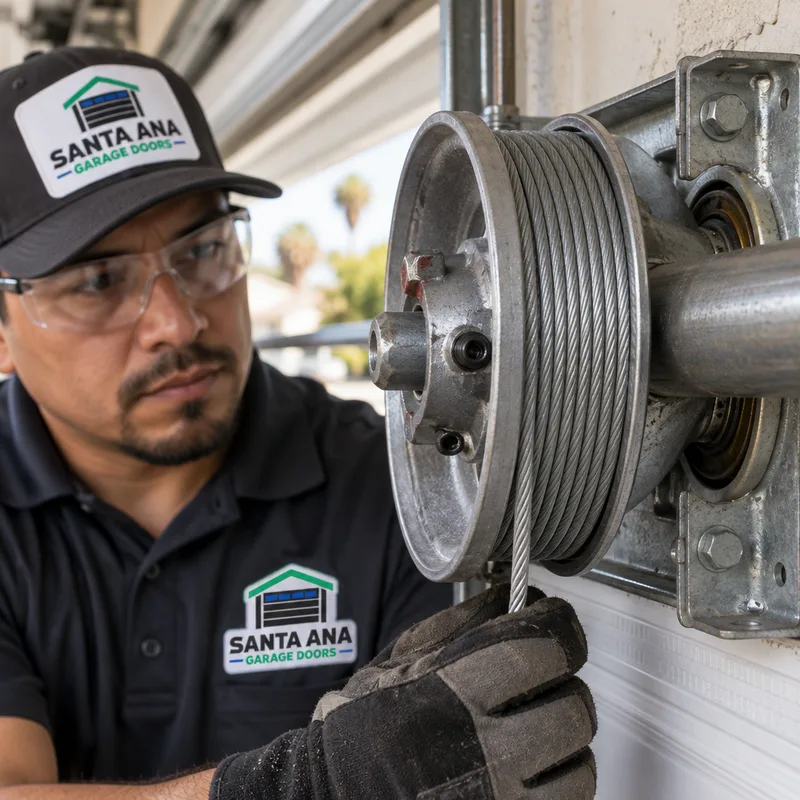
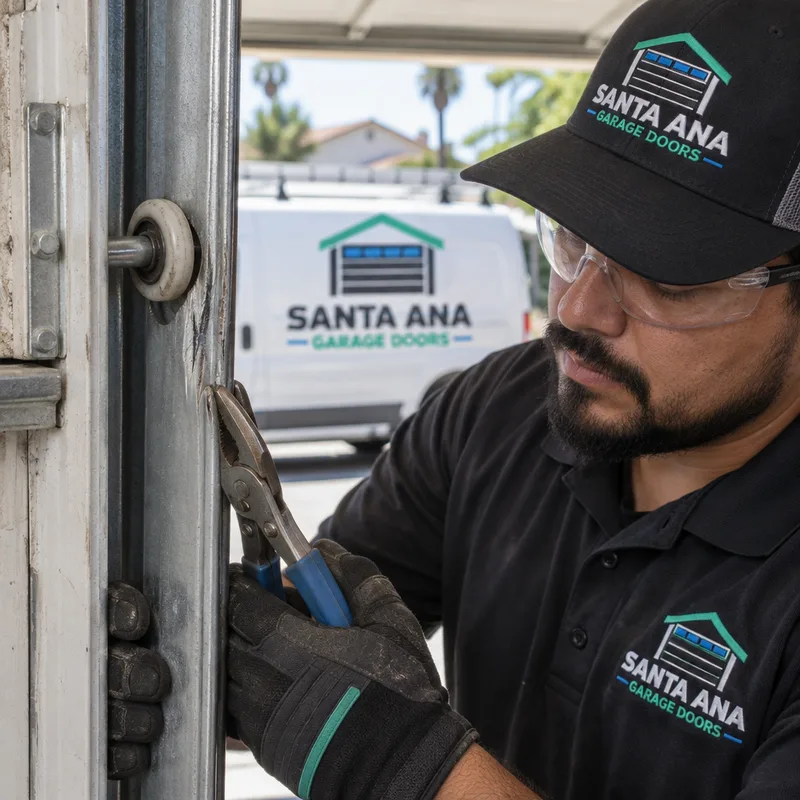
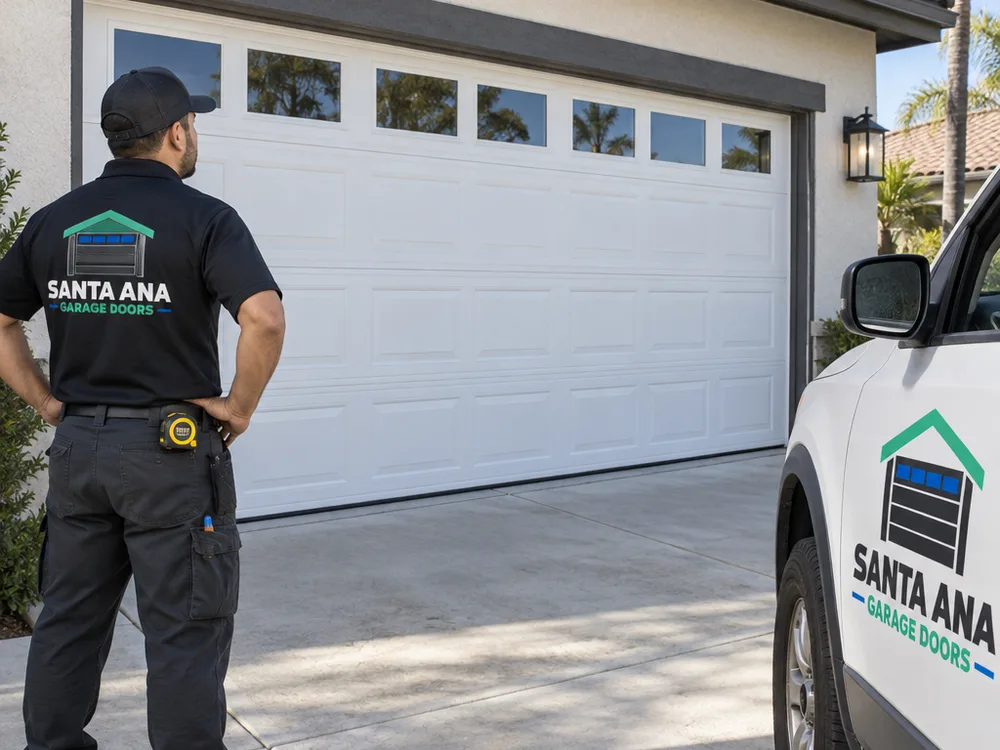
A broken garage door cable often shows up as a door that lifts crooked, hangs on one side, or stops partway with slack cable visible near the track. Contractors confirm by checking both lift cables at the bottom brackets and at the drums, then looking for a roller that climbed out of the track or a track section that got bent when the door twisted.
If a cable snapped or the door is visibly uneven, using the opener can pull the door harder into a bind and worsen track, roller, or panel damage. The safer move is to leave the door where it is and explain what you see when you call so the contractor arrives prepared to stabilize and reset it.
Cables can fail from age and metal fatigue, corrosion, rubbing on misaligned hardware, or a door that is out of balance and over-stressing one side. A contractor usually checks drum seating, bottom bracket hardware, and whether track alignment or a seized roller caused the cable to ride incorrectly.
Not always, but off-track events commonly damage cables or leave them kinked or frayed. During garage door off track repair, the contractor assesses whether the cable is still safe to reuse and whether the drum grooves and roller path are aligned so the problem doesn't repeat.
Bent garage door track repair typically starts with checking whether the track can be re-aligned or needs a section replaced, then setting the correct spacing so rollers don't bind. A contractor also checks the track's mounting brackets and the vertical-to-horizontal transition curve, because that's where rollers often climb when the door twists.
Yes, worn or seized rollers can force the door to drag in the track, which increases load and can contribute to cable issues. During garage door roller repair, contractors look for cracked wheels, worn bearings, and roller stems that wobble, then verify the rollers roll smoothly once the door is re-leveled.
The most helpful details are: whether the door is stuck open, closed, or halfway; whether one side is lower; whether you see a cable off the drum or hanging; and whether any rollers are out of the track. If you know the door type (single vs. double door) and whether it uses a torsion spring above the door, that helps the contractor plan for the correct parts and setup.
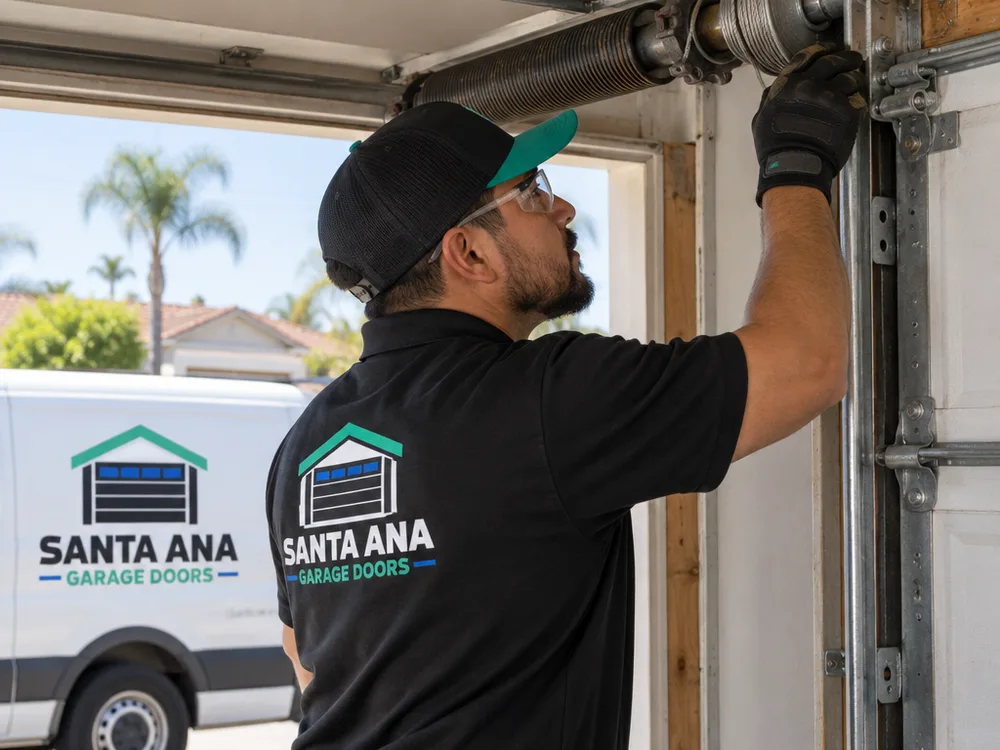
Cable work is tied to spring tension because the cables wrap around drums on the torsion shaft and must be set evenly on both sides. The contractor decides the safe method to unload and reset tension, then balances the door so it stays level and doesn't drift when lifted by hand.
If you suspect a broken cable, an off-track door, or roller and track damage, describe what happened once and we'll connect you with a local Santa Ana contractor who can inspect the setup and walk you through the next step.